

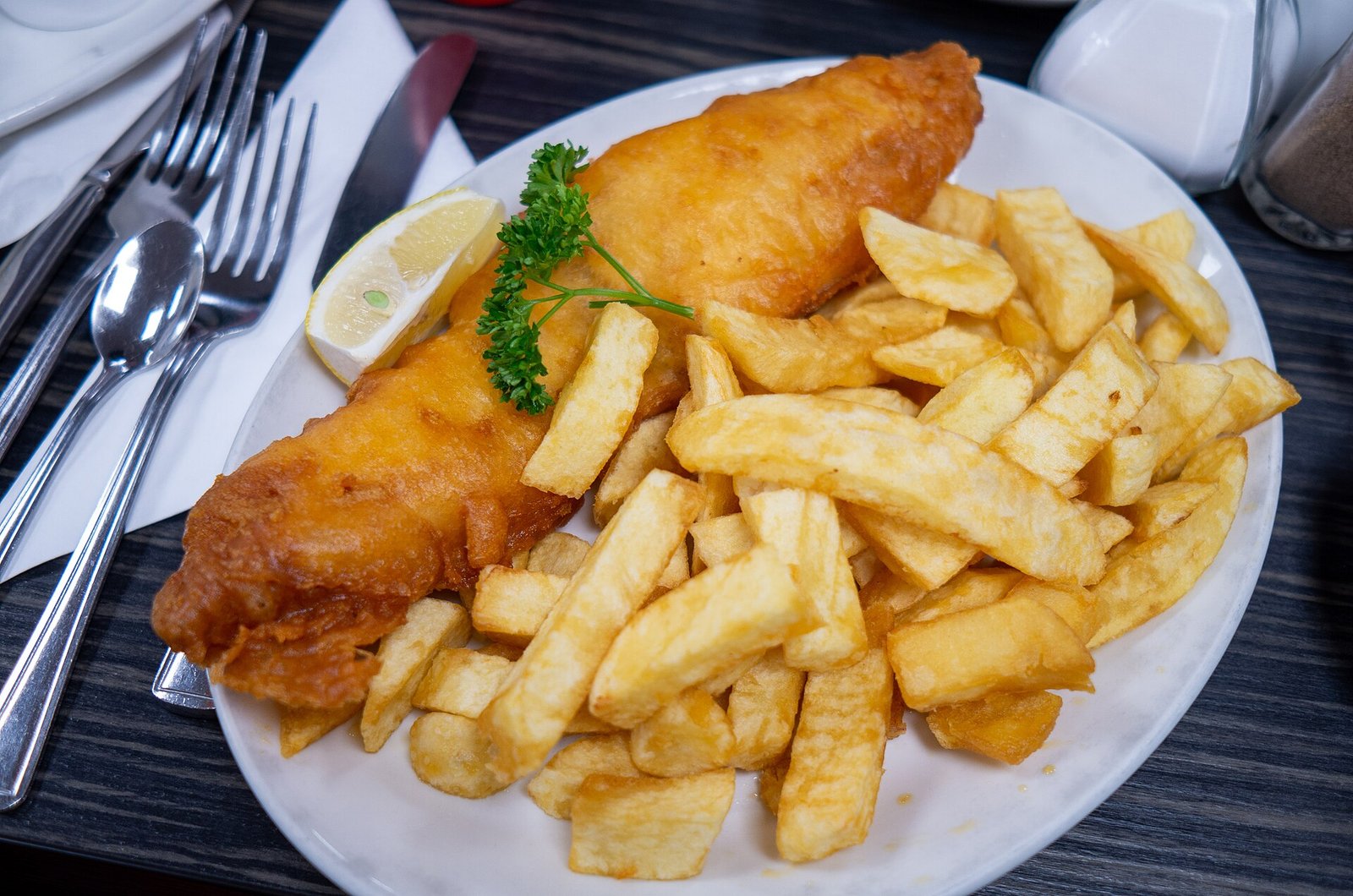
Battered fish, thick-cut chips and a splash of malt vinegar, eaten from the paper at the seaside. Fish and chips is one of the most recognisable dishes in British food culture and remains a firm favourite on Friday nights.
Where it began
Fried fish was sold on London streets by the early 19th century, a tradition brought by Jewish immigrants from Portugal and Spain. Chips, meanwhile, were popular in northern England. The two came together in the 1860s. Joseph Malin is often credited with opening one of the first fish and chip shops in London, while John Lees sold them in Mossley, Lancashire, around the same time.
Feeding the nation
Fish and chips became a cheap, filling meal for working families during the Industrial Revolution, helped by the growth of trawler fishing and railways that carried fresh fish inland. During the Second World War, fish and chips were not rationed, and the government saw chip shops as vital for keeping morale high.
The classic choices
- Cod: the most popular choice across much of England.
- Haddock: favoured in Yorkshire and Scotland for its sweeter flavour.
- Plaice and hake: popular alternatives in some regions.
Sides and sauces
Mushy peas are the traditional partner, especially in the north. Curry sauce and gravy have loyal fans, while in Scotland a “fish supper” may come with brown sauce. Pickled onions and gherkins add a sharp contrast, and a squeeze of lemon is never out of place.
Sustainable choices
Many chip shops now use fish certified as sustainably caught. Asking where the fish comes from is a simple way to support responsible fishing.
Frequently asked questions
When is National Fish and Chip Day?
It is usually held on the first Friday in June, celebrating chip shops across the UK.

